Junior and Pecola Breedlove
The Bluest EyeJunior and Pecola Breedlove are joined not by friendship but by a brief encounter in which Junior turns his command of the playground into a trap inside his home. His deliberate cruelty toward Pecola and the black cat ends in the animal’s death; Geraldine then treats Pecola, rather than Junior’s violence, as the intruder to be expelled. The episode makes their conflict a concentrated instance of how a child’s isolation can invite exploitation and how adult prejudice compounds the harm.
The Encounter Begins in the Playground
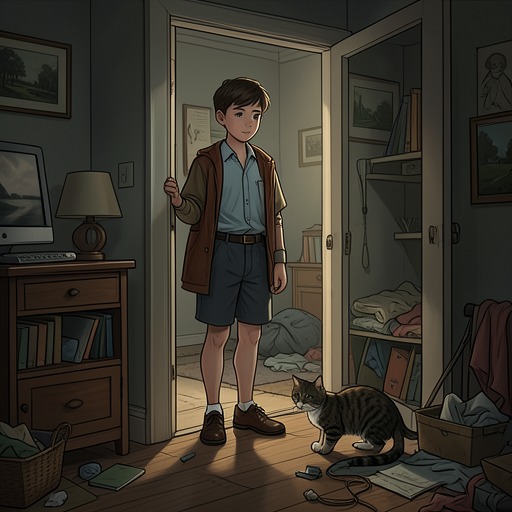
Junior is bored and frightened at home, while the playground is his joy. He has become a very good shot after throwing gravel at a boy, a detail that places his play alongside an established capacity for injury. When he sees Pecola taking a shortcut through the playground, he recognizes her as a girl he has seen many times standing alone at recess. Nobody plays with her. Junior assumes that her isolation is because she is ugly, converting the social rejection around her into an apparent explanation for it.
He first asserts ownership over the space, calling out to Pecola and insisting that nobody may cross his yard without his permission. The exchange shifts when he says she can play there if she wants and asks her name. Pecola gives it, says she does not want to play, and explains that she has to go home. Junior counters her refusal with an offer to show her something and invites her into the house, which he points out is right there. His approach moves from territorial intimidation to apparent welcome, but Pecola’s reluctance remains clear even as he keeps pressing the invitation.
The Cat as a Weapon
Inside, Pecola admires the room’s flowers: enormous dark-red blossoms on a rug. The moment of attention is interrupted when Junior presents the cat as something for her to see, then throws the big black animal directly at her face. The sudden assault converts the invitation into a setup. Pecola’s fear and surprise are met not with help but with Junior’s escalating control of the cat and the situation.
When the animal reacts to the touch it knows from Junior’s mother, Junior recognizes an expression he has seen before. He cries out for his cat, snatches it by a hind leg, and swings it around his head. His movement is awkward but sure. Pecola tells him to stop, and then grabs the arm swinging the cat. Their struggle brings them both down; Junior releases the animal, which flies with force into the window and slides down to the floor. The cat’s injury is not a separate accident imposed on the encounter: it follows directly from Junior’s handling of it and the struggle his attack has provoked.
Geraldine’s Judgment and Pecola’s Expulsion
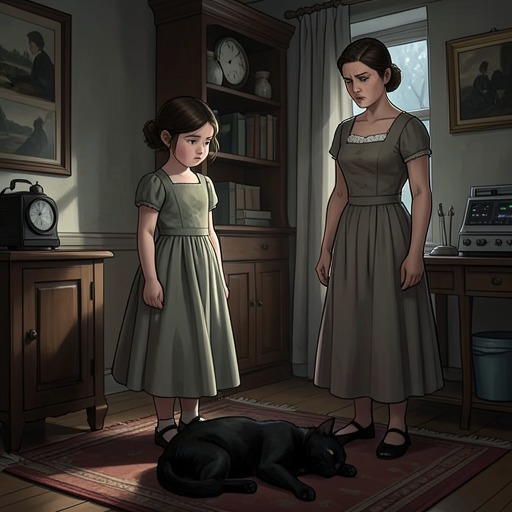
Geraldine picks up the limp cat and rubs her face in its fur. Looking over the animal, she sees Pecola’s dirty, torn dress, loosened braids, matted hair, and muddy shoes. Her attention makes Pecola’s disordered appearance the visible evidence against her, while the violence that caused the crisis is not what determines her judgment.
Geraldine looks at Pecola over the cat’s back and tells her to get out, calling her a nasty little black bitch. Pecola backs out of the house. Geraldine’s response transforms Junior’s private cruelty into a further rejection: Pecola is blamed and driven away rather than protected or heard. The episode therefore connects the conflict between the children to Geraldine’s treatment of Pecola, making the adult’s expulsion the encounter’s final consequence.
What the Conflict Reveals
Junior’s actions proceed through a sequence of invitations and reversals: he first claims the yard, then offers Pecola a place to play, then draws her inside under the promise of a display, and finally throws the cat at her. The sequence makes his apparent friendliness inseparable from his power to set the terms of the encounter. Pecola, meanwhile, repeatedly communicates that she does not want to play and needs to go home; those refusals do not stop him.
The episode also places Pecola’s social isolation beside two forms of harm. Junior treats her loneliness as a reason to target her, and Geraldine judges her through her appearance and race after Junior’s violence has created the scene. The black cat, cherished in Geraldine’s touch but endangered by her son, exposes the disparity in whose vulnerability receives care: Geraldine holds the injured animal tenderly and expels Pecola. Junior and Pecola’s conflict thus ends with Pecola carrying the consequences of violence she did not initiate, while the household’s authority confirms rather than corrects her exclusion.